Talem Virtual Library

Severity Intelligence Should Live Where the Claim Decision Happens
Claims intelligence creates more value when adjusters do not have to leave their workflow to find it. See how embedded crash and injury severity context can support BI decisions from FNOL through later claim development.

Injury Alignment: How Adjusters Can Interpret Crash, Injury, and Treatment Fit
Bodily injury claims become harder to manage when crash, injury, treatment, and recovery information are considered separately. Injury alignment gives adjusters structured severity context to support more consistent handling, review, and escalation decisions.

Why Provider Conversations Drift in MVA Claims & How Structured Injury Context Improves Alignment
Provider conversations in MVA claims often drift due to a gap between clinical findings and accident context. This article explores how structured injury insight, including crash physics and causation, can improve alignment, reduce variability, and support more consistent claims decisions.
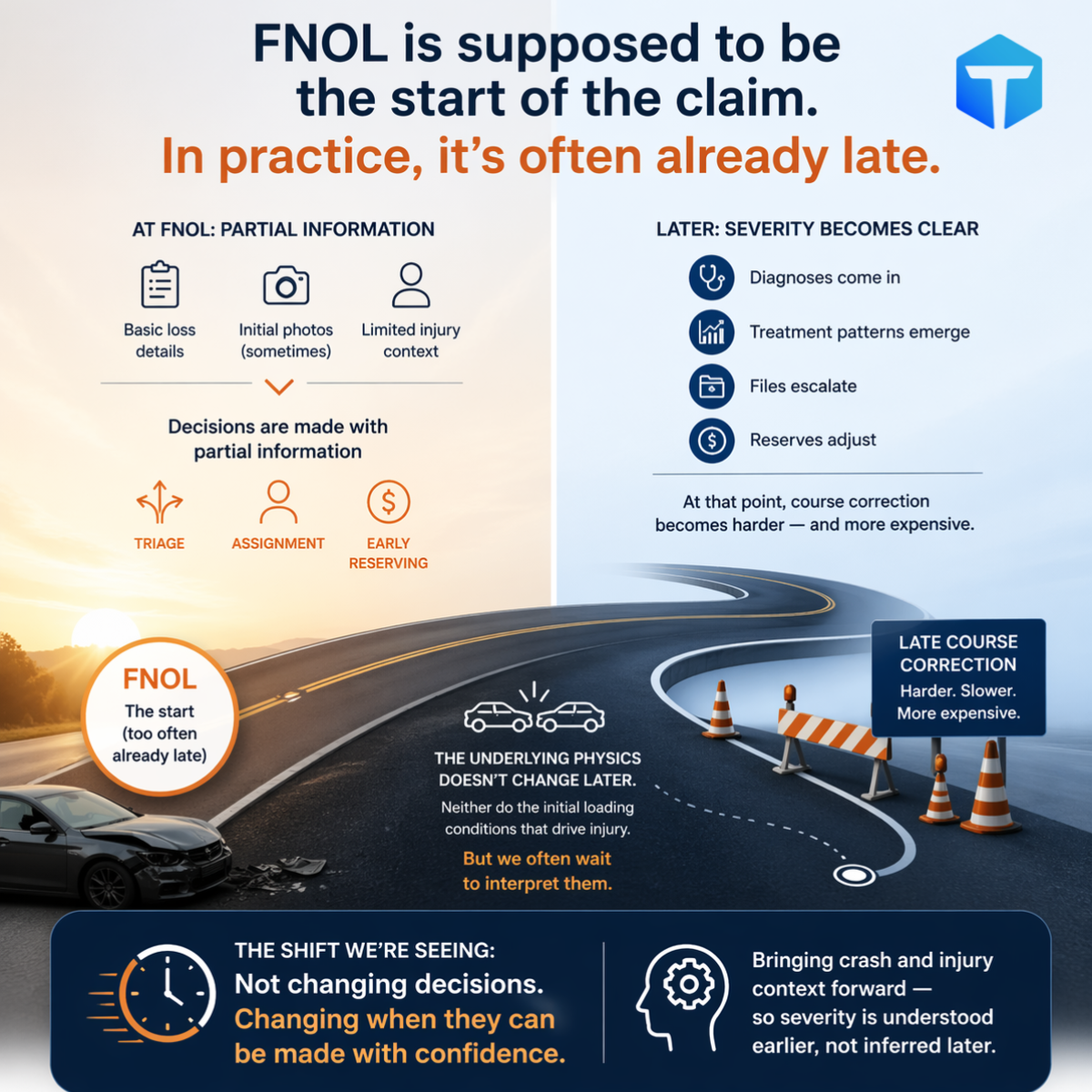
FNOL Isn’t Early Enough: Why Claim Severity Is Often Understood Too Late
FNOL is designed to be the start of the claim—but key severity signals already exist at impact. This article explores how crash physics, injury causation, and structured analysis can improve early triage, reserving, and claims decision-making.
Proudly Trusted By


