Talem Virtual Library

BMR and IME: Connecting the Accident, the person, and the Claim
An IME explains the claimant’s medical presentation. A BMR explains the collision and occupant-loading environment. Connecting both can create more focused referrals and a clearer foundation for bodily injury claim decisions.
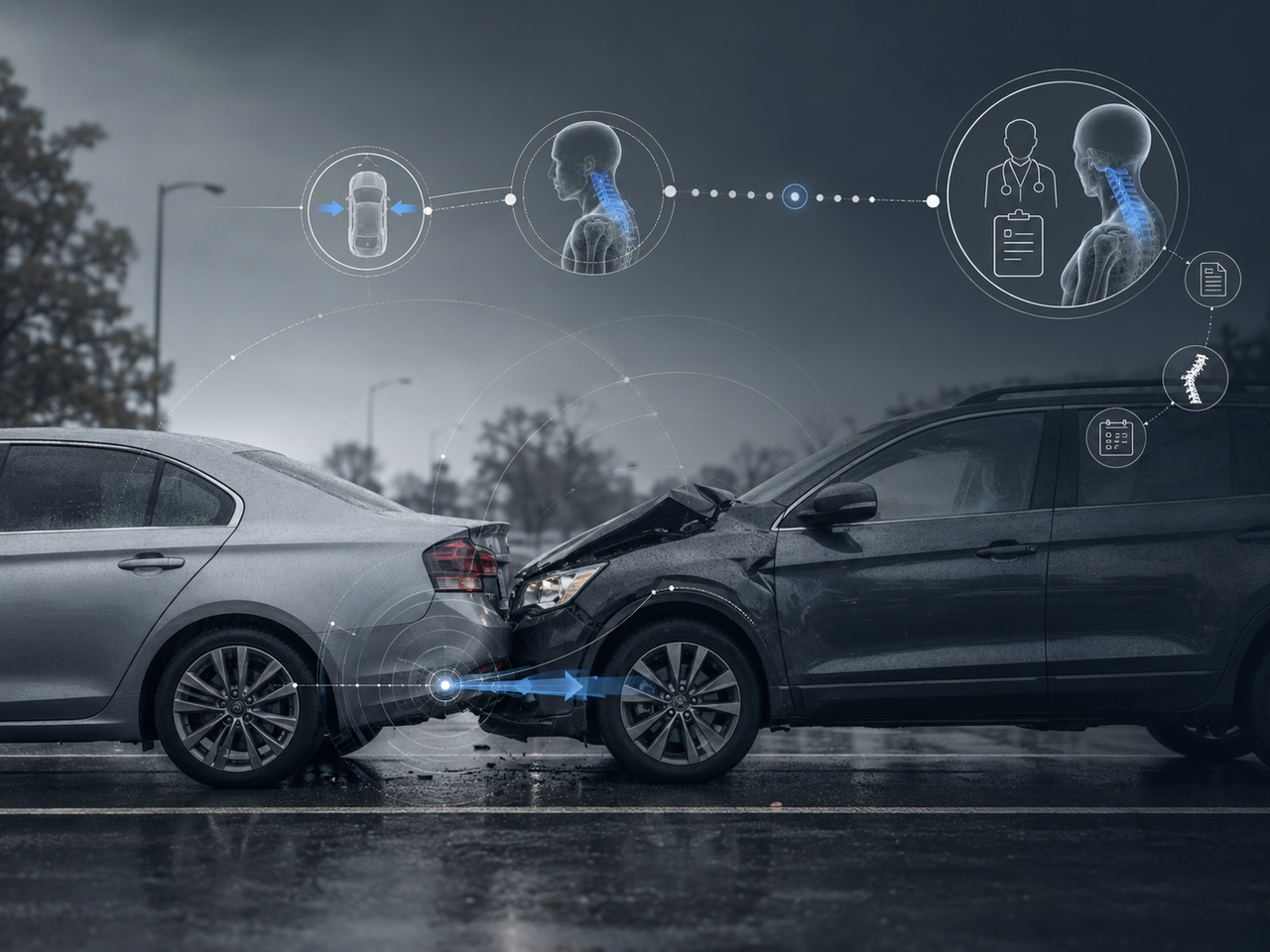
Why Does Injury Context Arrive After the Decisions That Need It?
Claims teams often receive structured injury context months after making their most important early decisions. Learn how objective crash analysis can bring useful severity and injury-plausibility insight closer to FNOL.

Treatment Proportionality in Bodily Injury Claims: Finding Review Points Earlier
Treatment volume alone does not explain a bodily injury claim. Learn how crash severity, treatment progression, and recovery information can help adjusters recognize meaningful review points earlier.

What Claim Data Reveals About Severity, Timing, and Escalation
A random sample of bodily injury claim data revealed important patterns involving crash severity, injury alignment, referral timing, and billing exposure. The opportunity is to identify developing claim risk earlier—not simply count completed services.

The Future of Bodily Injury Claims: Equipping Adjusters Earlier and Better
The future of bodily injury claims is not about replacing adjusters. It is about bringing crash, injury, treatment, and claim context forward so professionals can make better decisions earlier.

Injury Alignment: How Adjusters Can Interpret Crash, Injury, and Treatment Fit
Bodily injury claims become harder to manage when crash, injury, treatment, and recovery information are considered separately. Injury alignment gives adjusters structured severity context to support more consistent handling, review, and escalation decisions.

Why Provider Conversations Drift in MVA Claims & How Structured Injury Context Improves Alignment
Provider conversations in MVA claims often drift due to a gap between clinical findings and accident context. This article explores how structured injury insight, including crash physics and causation, can improve alignment, reduce variability, and support more consistent claims decisions.
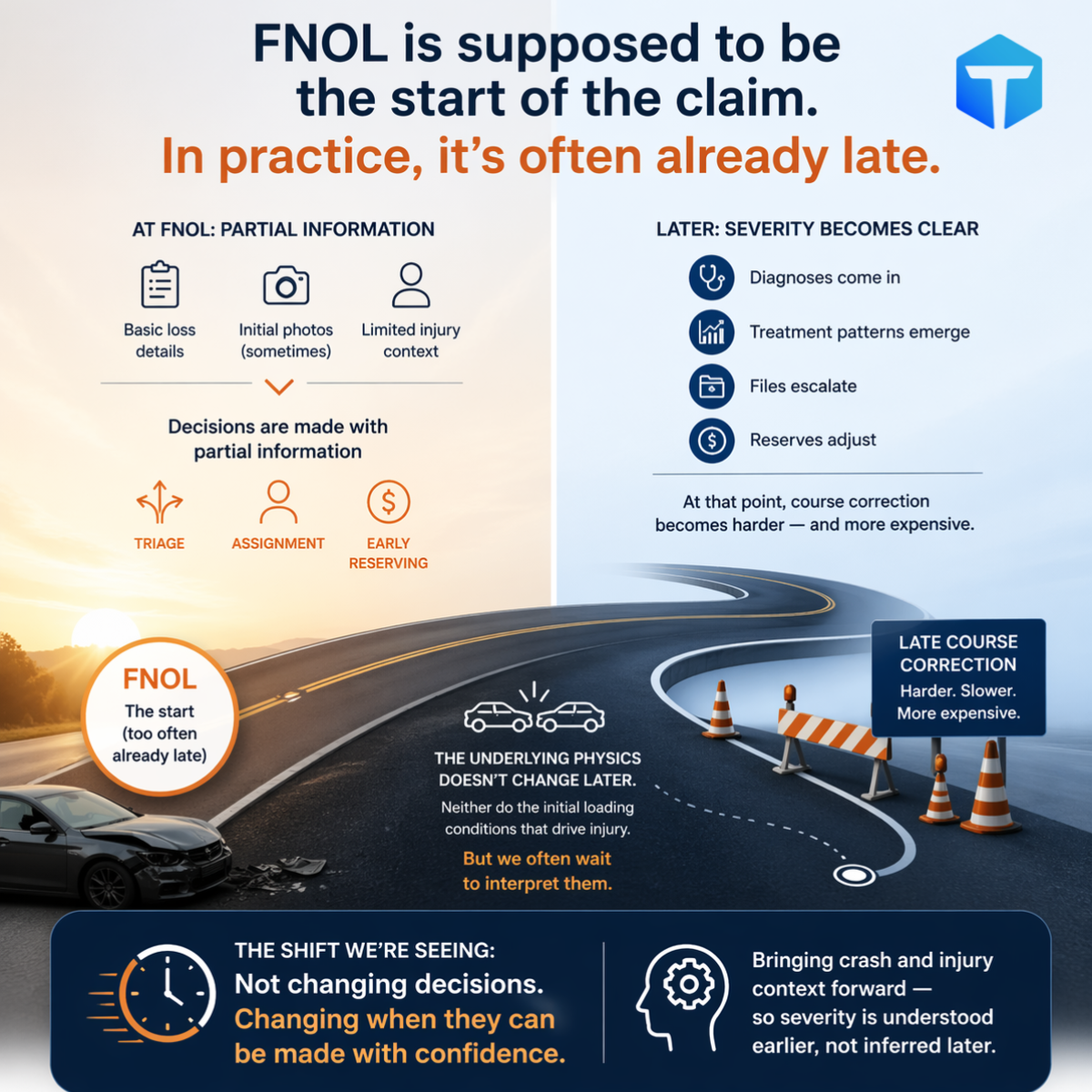
FNOL Isn’t Early Enough: Why Claim Severity Is Often Understood Too Late
FNOL is designed to be the start of the claim—but key severity signals already exist at impact. This article explores how crash physics, injury causation, and structured analysis can improve early triage, reserving, and claims decision-making.
Proudly Trusted By


