Talem Virtual Library

Why Does Injury Context Arrive After the Decisions That Need It?
Claims teams often receive structured injury context months after making their most important early decisions. Learn how objective crash analysis can bring useful severity and injury-plausibility insight closer to FNOL.

Severity Intelligence Should Live Where the Claim Decision Happens
Claims intelligence creates more value when adjusters do not have to leave their workflow to find it. See how embedded crash and injury severity context can support BI decisions from FNOL through later claim development.
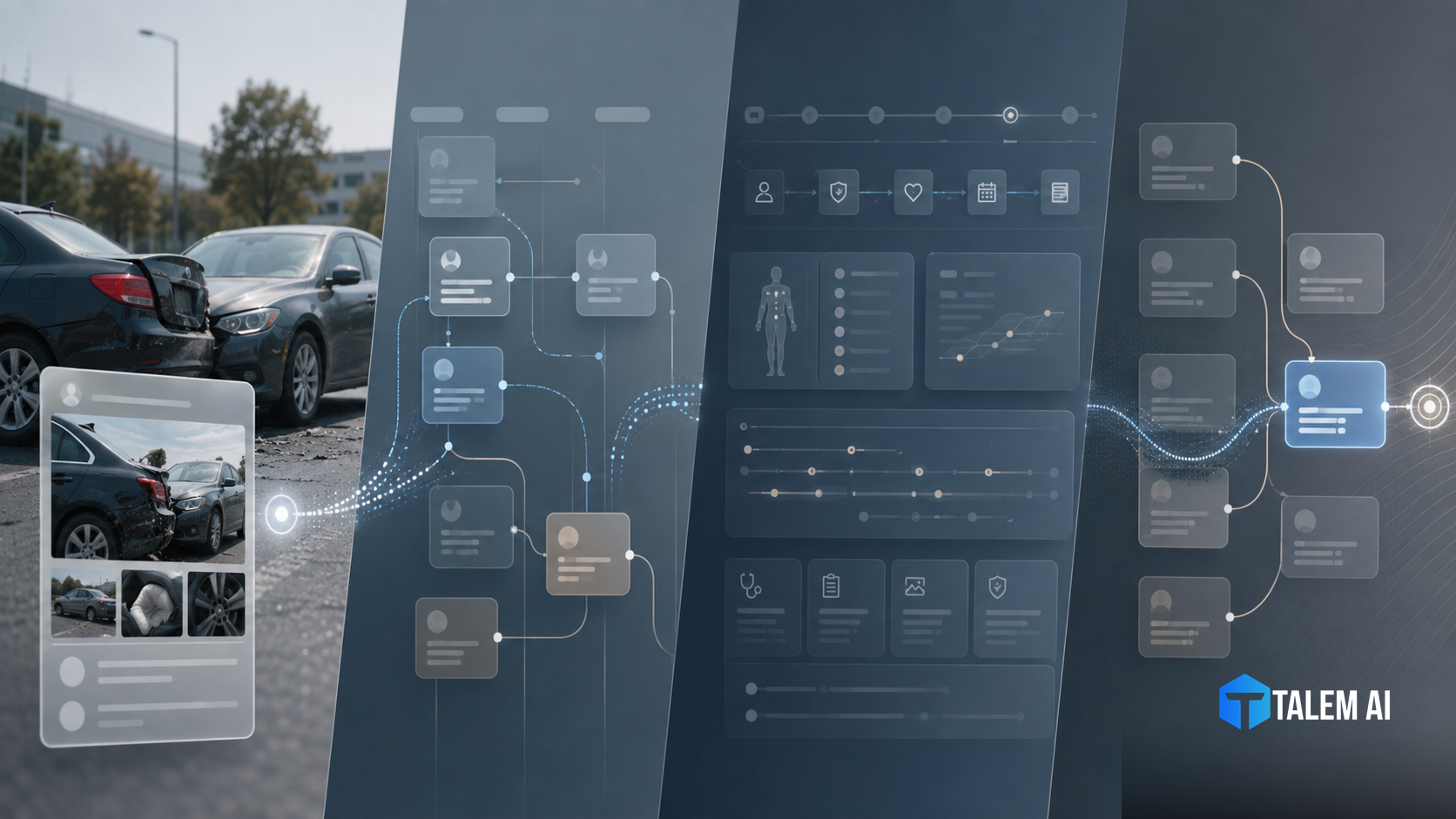
4 Places Bodily Injury Claims Quietly Lose Severity Context
Bodily injury claims often lose clarity at predictable transition points. This field guide shows where severity context breaks down across FNOL, assignment, treatment development, and reassignment—and what claims teams can do about it.

Cycle Time Is a Severity-Clarity Problem
BI claims do not always take longer because adjusters are slow. Often, the delay is the gap between when a claim materially changes and when the organization has enough clarity to act. This one-pager introduces the severity-clarity gap and a practical framework for identifying it.

Visible Vehicle Damage Does Not Tell You the Whole Injury Story
Vehicle photographs are valuable evidence, but visible damage alone does not determine occupant severity. Learn how crash mechanics, Delta-V, and biomechanical analysis turn that evidence into better early context for bodily injury claims.

The Future of Bodily Injury Claims: Equipping Adjusters Earlier and Better
The future of bodily injury claims is not about replacing adjusters. It is about bringing crash, injury, treatment, and claim context forward so professionals can make better decisions earlier.

Why Provider Conversations Drift in MVA Claims & How Structured Injury Context Improves Alignment
Provider conversations in MVA claims often drift due to a gap between clinical findings and accident context. This article explores how structured injury insight, including crash physics and causation, can improve alignment, reduce variability, and support more consistent claims decisions.
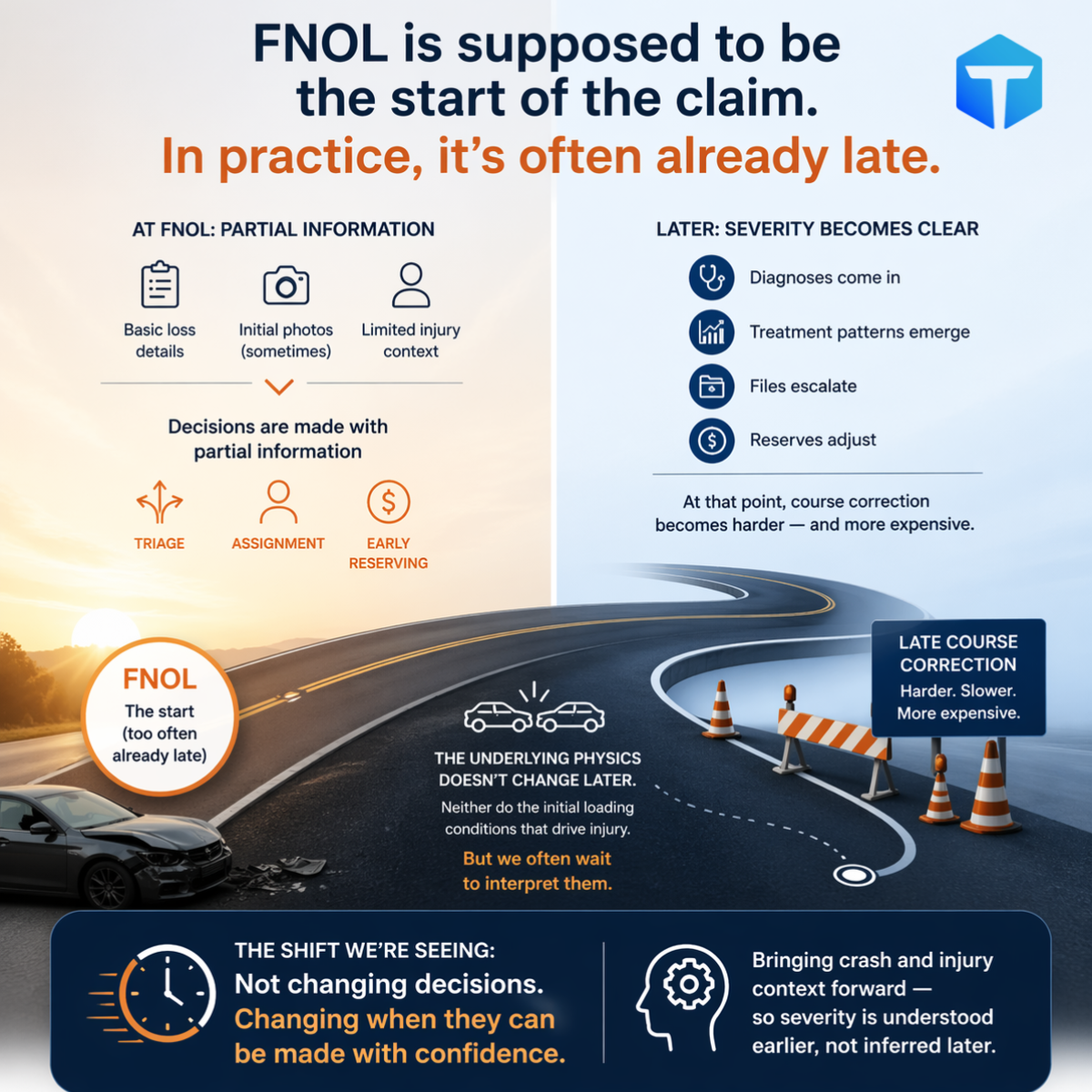
FNOL Isn’t Early Enough: Why Claim Severity Is Often Understood Too Late
FNOL is designed to be the start of the claim—but key severity signals already exist at impact. This article explores how crash physics, injury causation, and structured analysis can improve early triage, reserving, and claims decision-making.
Proudly Trusted By


